


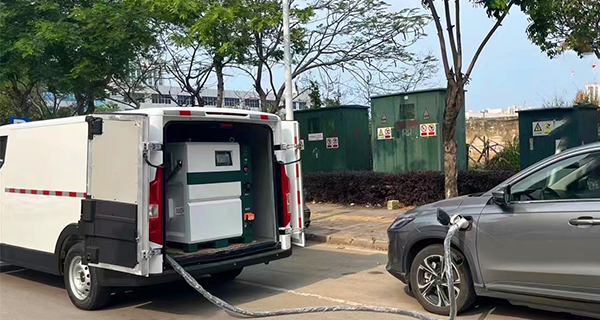
Faced with this new reality, adaptation is also necessary in terms of the energy infrastructure as it evolves, particularly in markets where grid build-out is too slow or expensive to accommodate the growth of the EV ecosystem—fast charging on wheels with containerized or trailer-mounted Battery Energy Storage Systems (BESS). The Idea: Mobile EV charging solutions using containerized or trailer-mounted battery energy storage systems (BESS) offer an attractive alternative. The Mobile BESS EV Charger offers high power capability to vehicles without requiring updates to the high-voltage grid.
However, offering mobile charging is not just a hardware play. To bring them to the reality of deployment, it is necessary to have a well-conceived business model that encompasses not only a billing and management platform but also seamless integration of power electronics and user interaction.
At Charge Ninja, we’re not just selling hardware — we help you set up an operational system. In this article, we take a closer look at the two primary revenue models and how we help implement them at every level.

Charge Ninja Mobile EV Charging Solutions
1. On-Demand Charging Services: Emergency & Spot Charging
Fast, flexible, and designed for immediate response.
Service Model
This model is built for ad-hoc or emergency use cases, where an end-user requests a one-time charging session. Suitable for:
Roadside EVs with depleted batteries
Temporary infrastructure needs (e.g. events, construction sites)
Rural or suburban areas without access to high-power grid charging
Commercial fleets during transition periods
Typical Flow
Customer requests charging via phone/app
Operator dispatches a mobile BESS + charger to the site
Operator initiates a fast DC charge (up to 120kW)
Session ends with kWh metering or time-based billing
Payment processed via POS, QR scan, or mobile wallet
Monetization Options
Flat Fee per Dispatch (e.g. $80–$150 per session)
Energy-Based Billing ($0.3–$0.6/kWh delivered)
Time-Based Billing ($1/minute connected)
Optional: idle fees, surge pricing, priority bookings
2. Subscription-Based Charging Services: Predictable, Recurring Revenue
Designed for residential communities, small fleets, and frequent-use customers.
Service Model
This model introduces scheduled, recurring service, with mobile chargers visiting predefined locations on a weekly or monthly basis. Suitable for:
EV users in apartment blocks or gated communities
Company fleets without fixed depot charging
Office parks, hospitals, or shared campuses
Government fleets or ride-sharing operators
Subscription Plans
Basic: 2 visits/month, capped at 80 kWh each
Standard: 4–6 visits/month, flexible scheduling
Premium: 8+ visits/month, priority dispatch, dedicated SLA
Add-ons: night-time scheduling, maintenance checks, fast-charging priority
The subscription model reduces customer acquisition cost and ensures predictable income. It is highly effective when paired with fleet analytics and smart routing.
3. Beyond Hardware: Software Ecosystem & Platform Capabilities
A true mobile charging business cannot operate without a unified backend system.
Charge Ninja helps clients design and deploy a complete digital stack, supporting both on-demand and subscription models. This includes:
• Custom-Branded Mobile App (iOS & Android)
Booking engine for on-demand or scheduled services
Real-time vehicle locator + ETA
Charging session control + notifications
Wallet integration (Alipay, Stripe, Apple Pay, cash options)
Billing history & support tickets
• OCPP 1.6J/2.0 Platform Integration
Our chargers and EMS fully support Open Charge Point Protocol, allowing seamless integration with third-party platforms or your own backend.
Remote control of charging sessions
Live monitoring of battery SOC, temperature, system health
Dynamic power adjustment & load balancing
Smart charging profiles and tariff management
Open APIs for CRM, ERP, or fleet platforms
• Admin Dashboard
Operator login, session logs, revenue tracking
System alerts and fault logging
Asset management (fleet of chargers, battery status)
Customer service portal and chat
4. Business Planning: Let Us Help You Build the Operation
Many entrepreneurs and project owners understand the opportunity but struggle with execution. That’s where we come in.
Our team can assist you with:
Use-case selection: B2C roadside service vs B2B fleet support
Fleet sizing: How many trailers? What battery size?
Charging power matching: 60kW, 120kW, or 160kW per vehicle?
Local compliance: Electrical standards, firefighting certification
Revenue simulations: Payback period and pricing strategy
Deployment SOPs: Technician training, safety protocol, dispatch logic
5. Example Configuration: 233kWh Mobile Charging Trailer
| Component | Specification |
|---|---|
| Battery | 233kWh Liquid-Cooled LFP, 1C Rate |
| DC Fast Charger | 120kW (2× CCS2 Guns) |
| AC Recharge | 3-phase, up to 80kW for overnight charging |
| EMS | Integrated with full safety and SOC control |
| Mobility Platform | Trailer-mounted, IP54 enclosure |
| App & Backend | Optional with OCPP 1.6J support |
| Payment Modes | QR Code, NFC, Credit Card, Cash (optional) |
| Branding Options | Logo, color, UI language customization |
Customized designs are available for high-altitude, cold-weather, or urban environments.
Charge Anywhere. Operate Everywhere.
The point is, with Charge Ninja, you’re not just purchasing a trailer or battery cabinet — you’re building an energy service.
We’ll take you from initial idea to live product, handing over a future-proof, scalable, and revenue-generating EV Charging solution. Whether you serve urban commuters, rural drivers, or commercial fleets, our mobile BESS platforms and backend systems are available for deployment.
👉 Get in touch today to schedule a technical consultation or request a tailored business plan. Your mobile energy network starts here.
What are the main business models for monetizing mobile EV charging?
The two main models are on-demand charging for emergencies or events, and subscription-based services for fleets or residential areas—each with flexible pricing options like flat rates, energy billing, or time-based fees.
Who benefits most from subscription-based mobile EV charging services?
This model suits apartment dwellers, company fleets, shared campuses, and ride-sharing operators. It offers scheduled visits, predictable costs, priority service options, and can be tailored with plans like Basic, Standard, or Premium.
How can Charge Ninja support new mobile charging businesses?
Charge Ninja helps with everything from use-case planning, fleet sizing, and power matching to compliance checks, pricing strategies, and deployment SOPs—transforming your concept into a fully operational mobile energy network.